
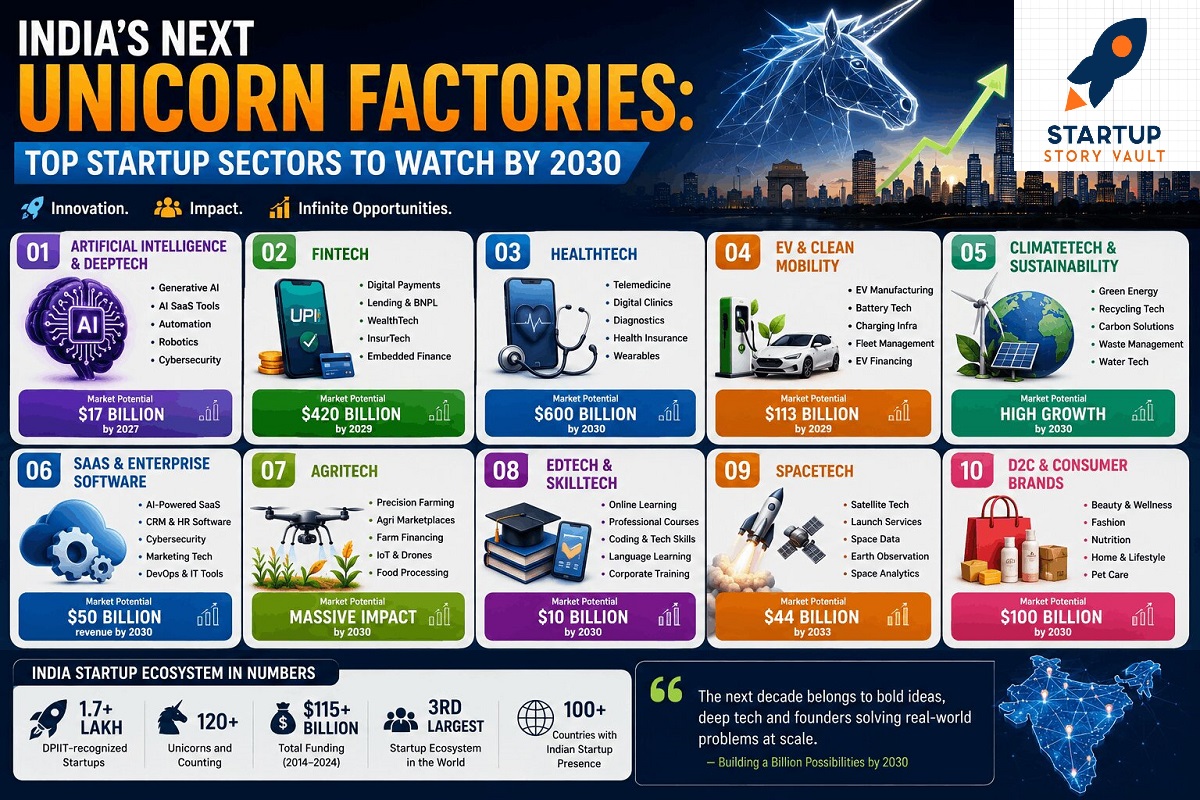
India’s startup ecosystem has become the third-largest in the world, with more than 1.7 lakh DPIIT-recognized startups and over 120 unicorns. As digital adoption, government support, and changing consumer behavior continue to drive innovation, several sectors are expected to witness massive growth by 2030.
Here are some of the most promising Indian startup sectors that could dominate the next decade.
1. Artificial Intelligence (AI) and DeepTech
Artificial intelligence is transforming industries ranging from healthcare to banking and manufacturing. According to BCG and Nasscom, India’s AI market is expected to reach $17 billion by 2027, growing at over 25% annually.
Why AI Will Boom
- Rising enterprise adoption.
- Generative AI revolution.
- Government-backed IndiaAI Mission.
- Demand for automation and analytics.
- Growth of AI-powered SaaS solutions.
Major Opportunities
- Generative AI platforms.
- AI agents.
- Machine learning tools.
- Cybersecurity solutions.
- Robotics and automation.
2. FinTech
India is one of the world’s largest digital payments markets. According to PwC, India’s fintech market could reach $420 billion by 2029, making it one of the fastest-growing sectors globally.
Growth Drivers
- UPI adoption.
- Digital banking.
- Embedded finance.
- Wealth-tech and insurtech.
- Credit expansion in Tier II and III cities.
Promising Areas
- Lending platforms.
- Buy Now Pay Later (BNPL).
- Personal finance apps.
- Insurance technology.
- B2B payments.
3. HealthTech
India’s healthcare industry is undergoing rapid digital transformation. The Indian healthcare market is projected to exceed $600 billion by 2030.
Key Growth Factors
- Rising health awareness.
- Expansion of telemedicine.
- Home diagnostics.
- Preventive healthcare.
- AI-based medical solutions.
Startup Opportunities
- Digital clinics.
- Online pharmacies.
- Wearable devices.
- Health insurance platforms.
- Diagnostic services.
4. Electric Vehicles (EV) and Clean Mobility
India aims for significant EV penetration by 2030. According to industry estimates, the Indian EV market could reach $113 billion by 2029.
Why Investors Are Bullish
- Government incentives.
- Rising fuel prices.
- Battery innovations.
- Expansion of charging infrastructure.
- Growing consumer demand.
Fast-Growing Segments
- EV manufacturing.
- Battery technology.
- Charging stations.
- Fleet management.
- EV financing.
5. ClimateTech and Sustainability
Climate-focused startups are attracting increasing investor interest worldwide. ESG regulations and sustainability goals are creating huge opportunities.
High-Growth Areas
- Recycling technology.
- Carbon management.
- Green energy.
- Waste management.
- Water technology.
Companies like Recykal and BluSmart have demonstrated the potential of this sector.
6. SaaS and Enterprise Software
India has become a major SaaS hub. According to Bain & Company, Indian SaaS companies could generate $50 billion in revenue by 2030.
Why SaaS Is Growing
- Global customer access.
- Subscription business models.
- AI integration.
- Lower operational costs.
Opportunities Include
- HR software.
- CRM platforms.
- Marketing automation.
- Cybersecurity solutions.
- AI-powered enterprise tools.
7. Agritech
Agriculture supports nearly half of India’s population, making agritech one of the most impactful sectors.
Growth Drivers
- Precision farming.
- Supply chain digitization.
- Farm financing.
- Smart irrigation.
- AI-based crop monitoring.
Emerging Opportunities
- Agri marketplaces.
- Drone technology.
- IoT-based farming.
- Food processing.
- Farm analytics.
8. EdTech and SkillTech
Although the sector faced challenges after the pandemic, demand for upskilling remains strong.
According to RedSeer, India’s online education market could exceed $10 billion by 2030.
Key Segments
- AI education.
- Professional certification.
- Coding platforms.
- Language learning.
- Corporate training.
9. SpaceTech
India’s space economy is expected to reach $44 billion by 2033, according to IN-SPACe.
Growth Catalysts
- Private satellite launches.
- Government reforms.
- Increased global demand.
- Lower launch costs.
Startup Opportunities
- Satellite manufacturing.
- Earth observation.
- Space data analytics.
- Launch technologies.
10. D2C and Consumer Brands
India’s growing middle class and e-commerce penetration are creating enormous opportunities for direct-to-consumer brands.
High-Potential Categories
- Beauty and personal care.
- Nutrition and wellness.
- Fashion.
- Pet care.
- Home and lifestyle products.
India’s D2C market is expected to cross $100 billion by 2030.
Comparison Table
| Sector | Estimated Market Potential |
|---|---|
| AI & DeepTech | $17 billion by 2027 |
| FinTech | $420 billion by 2029 |
| HealthTech | $600 billion by 2030 |
| EV & Clean Mobility | $113 billion by 2029 |
| SaaS | $50 billion revenue by 2030 |
| EdTech | $10 billion by 2030 |
| SpaceTech | $44 billion by 2033 |
| D2C Brands | $100 billion by 2030 |
Conclusion
India’s startup ecosystem is entering a new phase of growth. Artificial intelligence, fintech, healthtech, EVs, SaaS, climate tech, and space technology are expected to create the next wave of unicorns and innovation.
With strong government support, a massive consumer market, and increasing digital adoption, India is well-positioned to become one of the world’s leading startup hubs by 2030. Entrepreneurs and investors who focus on these high-growth sectors today are likely to benefit from enormous opportunities in the coming decade.