

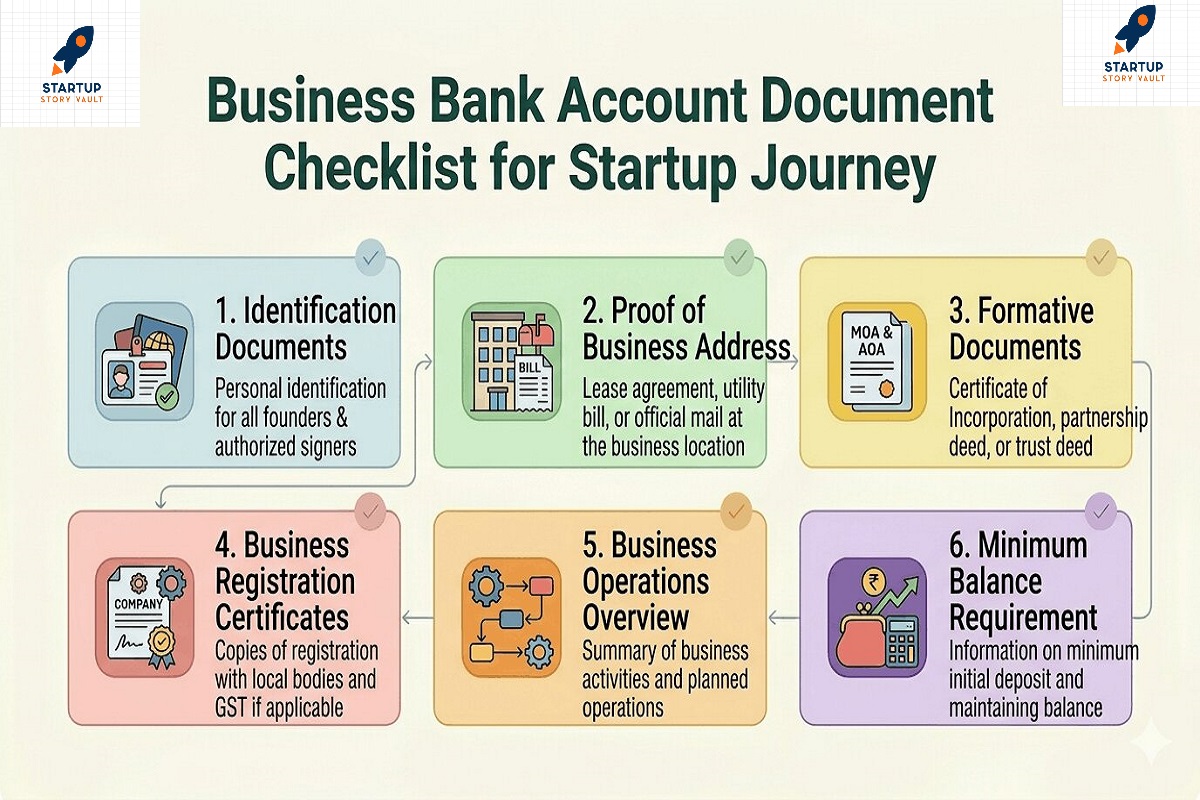
Opening a business bank account is one of the most important steps for any company, startup, LLP, or partnership firm. A business bank account helps organizations manage financial transactions professionally, maintain transparency, receive payments, pay taxes, and build credibility with clients and investors.
Banks require specific documents before opening a current account to verify the legal existence, ownership, and authenticity of the business. These documents also help banks comply with government regulations, Know Your Customer (KYC) norms, and anti-money laundering laws.
Below is a detailed explanation of the major documents required for opening a business bank account and why each document is important.
1. Certificate of Incorporation
The Certificate of Incorporation is one of the most important documents required for company bank account opening.
What It Is
It is an official certificate issued by the Registrar of Companies (ROC) under the Ministry of Corporate Affairs (MCA). This document confirms that the company is legally registered in India.
Why It Is Needed
- It proves the legal existence of the company.
- Banks use it to verify that the business is genuine and officially recognized.
- It contains important details such as:
- Company name
- CIN (Corporate Identification Number)
- Date of incorporation
How It Helps
- Builds trust and credibility with the bank.
- Enables the company to conduct financial transactions legally.
- Required for compliance and regulatory purposes.
Without the Certificate of Incorporation, a private limited company cannot open a current account.
2. PAN Card of Company
The PAN (Permanent Account Number) card of the company is another mandatory document.
What It Is
Issued by the Income Tax Department, the PAN is a unique identification number for tax-related activities.
Why It Is Needed
- Banks require PAN details for tax reporting and financial monitoring.
- It helps track business income and transactions.
- Mandatory under Income Tax rules for opening business accounts.
How It Helps
- Enables filing of company income tax returns.
- Helps maintain proper tax compliance.
- Required for large financial transactions and GST-related activities.
A company cannot operate financial activities smoothly without a PAN card.
3. Board Resolution for Bank Account
A Board Resolution is an official document passed by the company’s board of directors.
What It Is
It is a written resolution authorizing the opening of a bank account and appointing authorized signatories.
Why It Is Needed
- Banks need confirmation that the company has officially approved the account opening.
- It specifies:
- Name of the bank
- Type of account
- Authorized persons allowed to operate the account
How It Helps
- Prevents unauthorized account operations.
- Creates accountability and transparency.
- Protects the company from internal disputes.
This document is especially important for private limited companies and corporations.
4. KYC Documents of Directors
KYC documents are required for identity verification of directors or authorized persons.
What It Includes
- Aadhaar Card
- PAN Card
- Passport
- Driving License
- Voter ID
Why It Is Needed
- Banks must verify the identity of key individuals connected to the company.
- Required under RBI KYC guidelines.
- Helps prevent fraud, money laundering, and fake businesses.
How It Helps
- Ensures secure banking operations.
- Builds trust between the bank and the company.
- Protects the banking system from illegal activities.
Directors may also need to submit passport-size photographs and personal address proof.
5. Address Proof of Company
Banks require proof of the company’s registered business address.
Accepted Documents
- Utility bills
- Rent agreement
- Property tax receipt
- Lease agreement
- Shop establishment certificate
Why It Is Needed
- Confirms the physical existence of the business.
- Helps banks maintain communication records.
- Required for legal and regulatory verification.
How It Helps
- Supports smooth document delivery and official communication.
- Builds legitimacy and credibility of the business.
- Useful during audits and inspections.
The address proof should generally not be older than 2–3 months.
6. GST Certificate
The GST registration certificate is often required, especially for businesses registered under GST.
What It Is
A government-issued certificate containing the GSTIN (Goods and Services Tax Identification Number).
Why It Is Needed
- Verifies that the business is registered under GST laws.
- Helps banks understand the nature of business operations.
- Required for businesses involved in taxable goods or services.
How It Helps
- Enables smooth GST-related transactions and tax filing.
- Improves business credibility.
- Helps while applying for loans or payment gateway services.
Many banks also use GST details for financial assessment.
7. Partnership Deed (If Applicable)
This document is required for partnership firms.
What It Is
A legal agreement between partners that defines business terms and ownership structure.
Why It Is Needed
- Banks use it to verify partnership details.
- It clearly defines:
- Profit-sharing ratio
- Roles and responsibilities
- Partner authority
How It Helps
- Prevents disputes among partners.
- Clarifies who can operate the bank account.
- Creates legal transparency.
The partnership deed should ideally be notarized or registered.
8. LLP Agreement (If Applicable)
This document is mandatory for Limited Liability Partnerships (LLPs).
What It Is
An LLP agreement defines the structure, operations, and partner responsibilities of the LLP.
Why It Is Needed
- Banks verify the legal structure and authorized partners.
- It specifies operational rules and decision-making authority.
How It Helps
- Protects partner interests.
- Provides legal clarity to the bank.
- Ensures smooth banking operations.
LLP accounts cannot usually be opened without this agreement.
9. Company Seal
Some banks may ask for the company seal or stamp.
What It Is
A stamp containing the company’s name and registration details.
Why It Is Needed
- Used for official authentication on forms and documents.
- Confirms that documents are approved by the company.
How It Helps
- Adds professionalism and authenticity.
- Reduces risk of document misuse.
- Supports official business communication.
Although digital processes are increasing, many banks still request company seals.
10. Authorized Signatory Proof
Banks require proof of the individual authorized to operate the account.
What It Includes
- Identity proof
- Address proof
- PAN card
- Authorization letter
Why It Is Needed
- Confirms who can sign cheques and operate the account.
- Prevents unauthorized transactions.
How It Helps
- Ensures secure banking operations.
- Creates accountability.
- Helps banks verify signatures and approvals.
Authorized signatories are usually directors, partners, or senior management personnel.
Conclusion
Opening a business bank account requires proper documentation to ensure legal compliance, transparency, and financial security. Each document serves a specific purpose, from proving business existence to verifying identities and authorizing account operations.
Proper documentation helps:
- Build trust with banks
- Ensure smooth financial transactions
- Prevent fraud and misuse
- Support tax and legal compliance
- Improve business credibility
Submitting complete and accurate documents can speed up the account opening process and help businesses start operations without delays.